top of page
Alamo_edited.jpg

South Texas | 47 Counties

King_Ranch.jpeg
Aransas
Atascosa
Bandera
Bee
Bexar
Brooks
Calhoun
Cameron
Comal
Dimmit
DeWitt
Duval
Edwards
Frio
Gillespie
Goliad
Gonzales
Guadalupe
Hidalgo
Jackson 
Jim Hogg 
Jim Wells
Karnes
Kendall
Kenedy
Kerr
Kinney
Kleberg
La Salle 
Lavaca
Live Oak
Maverick
McMullen
Medina
Nueces 
Real 
Refugio 
San Patricio
Starr
Uvalde
Val Verde
Victoria
Webb
Willacy
Wilson
Zapata
Zavala
Texas-Ranger-Hall-of-Fame-&-Museum.jpg

The 1836 Battle of the Alamo during the Texas Revolution, gave this site profound historical significance, representing centuries of cultural exchange, conflict, and the forging of a new identity in Texas. Between 1682 and 1793, missions were built by Spanish priests and soldiers throughout Texas to evangelize indigenous peoples. Abandoned missions were later fortified and used during battles against the Mexican Army for Texas’ Independence.  Originally established in 1718 as Mission San Antonio de Valero, by 1836 "the Alamo" had transitioned into a military outpost and  defensive position in the fight for Texas liberty.

Explore historical museums and sites below or
go straight to the locations map.

1836

REMEMBER THE
BATTLE OF THE ALAMO

Regional Texas Map
SOUTH TEXAS

Is your Texas history museum or site missing?? Contact us and let's put you on the map!

Discover South Texas History

With 47 counties in the Hill Country, follow in the footsteps of Native Americans, Spanish missionaries and German immigrants to discover fascinating Historic Sites and little-known Texas Tales.

Statue with Marker-Lg.jpg
Christian Methodist
Episcopal Church of
Gillespie County

This monument honors the 1945 Iwo Jima flag raising and Marine sacrifice; the nearby museum tells the story of their valor.

Palo Alto Battlefield.jpg
Palo Alto
Battlefield National
Historical Park

Palo Alto Battlefield marks

1846’s first major U.S.-Mexico clash, starting the Mexican-American War.

Resaca_De_La_Palma_Battlefield.jpg
Resaca de la Palma
National Battlefield

Resaca de la Palma National Battlefield marks a key 1846 U.S. victory in the Mexican–American War near Brownsville.

Pioneer Museum.jpeg
Pioneer Museum

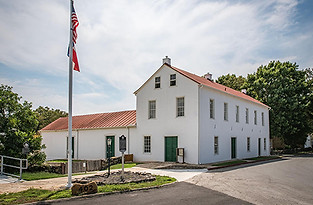
Pioneer Museum is home to ten historic structures staged to showcase daily life across Gillespie County’s rich history.

gillespie-county-country-schools.jpg
Gillespie County
Country Schools

Self-guided trail of 17 Gillespie County schools (1847–1936) preserves Hill Country architecture and education heritage.

Nimitz_Museum_Fredericksburg_Texas_LTT.jpg
National Museum of the Pacific War

Museum honoring Admiral Nimitz and telling the story of WWII in the Pacific through exhibits on his life and command.

corpus christi museum of science and history.jpg
Corpus Christi Museum of Science and History

The museum showcases South Texas history through artifacts, shipwrecks, and exhibits on early explorers and settlers.

Whitehead_Memorial_Museum.jpg
Whitehead
Memorial Museum

Whitehead Memorial Museum preserves local history with pioneer buildings, artifacts, and Judge Roy Bean’s grave.

Fort Brown.jpeg
Fort Brown

Fort Brown, established in 1846 as Fort Texas, is Texas’s first U.S. Army post and key site in the Mexican–American War.

The_Alamo.png
The Alamo

The Alamo in San Antonio preserves the 1836 battle site, symbolizing Texas independence and rich frontier history.

san antonio missions.png
San Antonio
Missions

San Antonio Missions, Texas’s only UNESCO World Heritage Site, preserve Spanish frontier history and an enduring legacy.

Iwo-Jima-Monument.jpeg
Iwo Jima Monument and Memorial Museum
State Historic Site

This monument honors the 1945 Iwo Jima flag raising and Marine sacrifice; the nearby museum tells the story of their valor.

Ferdinand Lindheimer House.jpeg
Ferdinand Lindheimer
House 

Ferdinand Lindheimer House preserves the 1852 home of Texas’s “Father of Botany” and early German settler life.

Fort Martin Scott State Historic Site.jpeg
Fort Martin Scott
State Historic Site

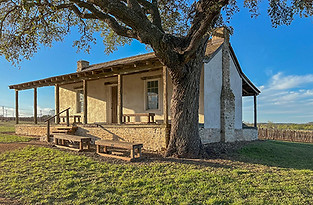
Fort Martin Scott, built in 1848, was the first U.S. Army frontier post in Texas, protecting settlers and travelers.

King_Ranch.jpeg
King Ranch

King Ranch, founded in 1853, is the nation’s largest ranch and a National Historic Landmark in Texas ranching history.

Lyndon-B.-Johnson-State-Historical-Park.jpg
Lyndon B. Johnson
State Park & Historic Site

State Park showcases a living history German-Texan farmstead with historic buildings and early Hill Country life.

Presidio-La-Bahia-Gallery.jpg
Presidio la Bahía
State Historic Site

Presidio La Bahía in Goliad, built 1749, is a restored Spanish fort

and a key site in Texas Revolution history.

Roma-Historic-District.jpeg
Roma
Municipal Park

The Roma Historic District preserves an intact 1800s border town that served as a key Rio Grande port and trade hub.

Fannin_Battleground.jpeg
Fannin Battleground
State Historic Site

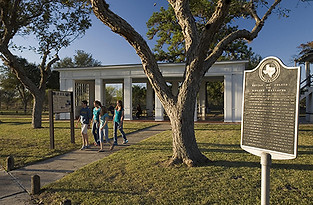
This historic site marks the 1836 Battle of Coleto Creek, where Col. Fannin surrendered during the Texas Revolution.

Majestic_Theater.jpg
Majestic Theater

Opened in 1929, the Majestic Theatre is San Antonio’s oldest and largest atmospheric theater, seating over 2,200 guests.

Spanish-governor-s-palace.png
Spanish Governor's
Palace

Built in 1749, the Spanish Governor’s Palace is Texas’s last colonial presidio, preserving Spanish frontier history.

UTSA Institute of Texan Cultures.jpg
UTSA Institute
of Texan Cultures

The Institute of Texan Cultures explores Texas’s diverse heritage and preserves the histories of its cultural groups.

Palmito-Ranch-Battlefield.jpg
Palmito Ranch
Battlefield
State Historic Site

Palmito Ranch Battlefield marks the final land battle of the Civil War, fought May 12–13, 1865, near Brownsville, Texas.

Port Isabel Lighthouse.jpg
Port Isabel Lighthouse
State Historic Site

Port Isabel Lighthouse, built in 1852, is Texas’s only public lighthouse and served as a Civil War lookout and beacon.

Harper Pioneer Museum.jpg
Harper Pioneer Museum

Harper Pioneer Museum displays artifacts, photos, and stories highlighting the pioneer era and local settler history.

Schreiner_Mansion.jpg
Schreiner Mansion

Schreiner Mansion, built in 1879, showcases Victorian architecture and the legacy of Texas pioneer Charles Schreiner.

Boyhood-Home.jpg
Lyndon B. Johnson
Boyhood Home

Lyndon B. Johnson’s birthplace, boyhood home, and ranch are preserved to tell his journey from Texas roots to president.

Landmark_Inn.jpeg
Landmark Inn
State Historic Site

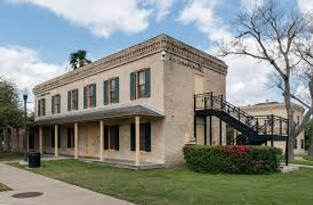
Landmark Inn tells the story of migration, industry, and preservation on the Medina River in historic Castroville, Texas.

Briscoe-Center.jpg
Briscoe-Garner
Museum

The museum highlights the lives of two major Texas political figures: Governor Briscoe and Vice President Jack Garner.

Trevino-Uribe Rancho.jpeg
Treviño-Uribe
Rancho

Trevino-Uribe Rancho is an 1830s fortified Spanish Colonial home, preserving early borderlands ranching history.

The-Witte-Museum.jpg
Witte Museum

The Witte Museum preserves Texas history through artifacts, historic homes, and exhibits from prehistory to today.

Casa_Navarro.jpeg
Casa Navarro
State Historic Site

Casa Navarro honors José Antonio Navarro, Tejano leader and Texas Independence signer at his original 1850s home.

Fulton Mansion.jpg
Fulton Mansion
State Historic Site

In 1877 Fulton Mansion had its mansard roof and ornate trim, interior gas lighting, flush toilets, and other refinements.

GO! South Texas History Museums & Sites

           Double Click

Shift-Double Click

Support LoneStar Heritage

Give today to the LoneStar Heritage Foundation, a Texas charitable organization, and help save the disappearing Texan.

bottom of page